


From Classroom Projects to Real-World Impact: A First-Year Win at the Infy App Design Challenge
By Josh Hans, Computer Science Teacher, Franklin D. Roosevelt High School, Brooklyn
June 15, 2026
I teach computer science at Franklin D. Roosevelt High School in Brooklyn, working with students across the full range, from introductory courses all the way through AP Computer Science. A few years ago, a single moment reframed how I thought about all of it.
During a school-wide mural project, my students were asked a simple question: what does computer science mean to you?
They struggled to answer.
The most concrete example they could offer was a 2D array project. That moment stayed with me, not because it reflected a lack of ability, but because it revealed a lack of connection. If that was the most meaningful work they could point to, then we needed to rethink what they were experiencing.
I began shifting the classroom toward creativity, ownership, and visual projects. But even then, something was missing. Students needed more than engaging assignments; they needed something real.
That’s where the Infy App Design Challenge, delivered by Infosys Foundation USA and PENCIL, came in.
From Schoolwork to Something Real
For many students, the journey began in December 2025 with a one-day bootcamp. It was their first exposure to how ideas take shape in a professional setting.
They weren’t asking, “Is this for a grade?” They were asking, “Could this actually work?”
When asked if they’d be willing to extend their day to take on a ninth period and commit to building something over months, 25 students said yes.
Not because they had to. Because they wanted to.
Building Ideas That Matter to Them
Each idea reflected something personal, something students were paying attention to beyond the classroom:
- FutureLighters designed a platform to help students find volunteer opportunities.
- Manuscript built a free tutoring platform combining live mentors with AI.
- Anthologia created a safe space for teen book lovers.
- RemediMind focused on improving medical literacy.
- And then there was QuietSafe. For the students behind QuietSafe, the idea was personal. They knew what it felt like to travel home late after a game or practice. So, they built something to address it.
Learning Beyond the Classroom
As the weeks went on, students began to operate like teams. They created agendas, ran meetings, debated priorities, and worked through disagreements.
With guidance from Infosys mentors, feedback became something they actively engaged with. They questioned it, refined their ideas, and took ownership of the process.
Stepping Onto a Bigger Stage
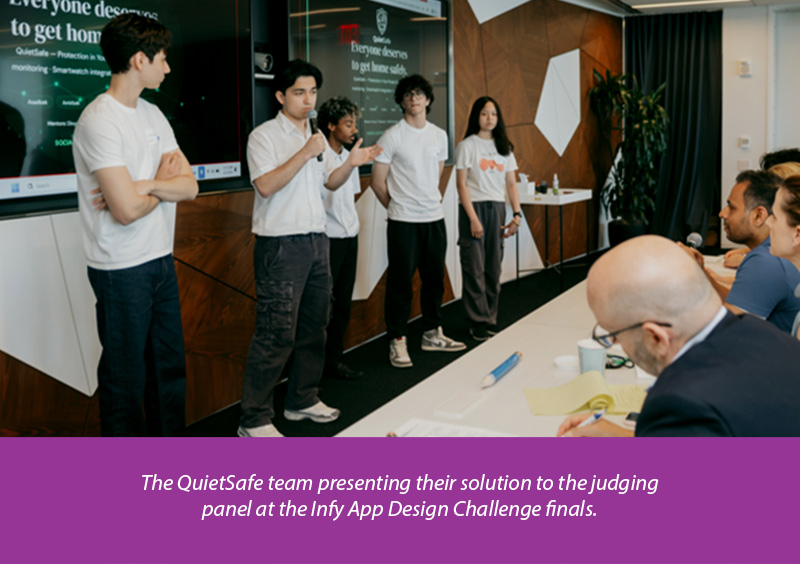
Five student teams traveled to the One World Trade Center to present their ideas.
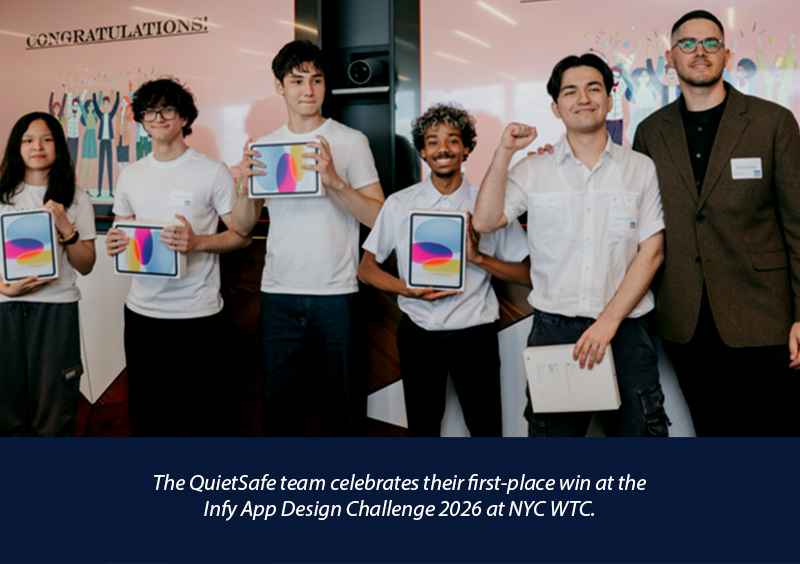
The QuietSafe team delivered their pitch and took first place.
“QuietSafe is a safety app that includes real-time AI monitoring, smartwatch integration, and satellite tracking. Its reliable protection, emergency alerts, danger location system, and behavior detection are its key features. We believe that everyone deserves to get home safely. Our idea came from wanting to make people feel safer and more prepared in everyday situations. Through the process, we learned how to turn a real problem into a working solution. Winning made all the effort feel worth it.”
— Team QuietSafe
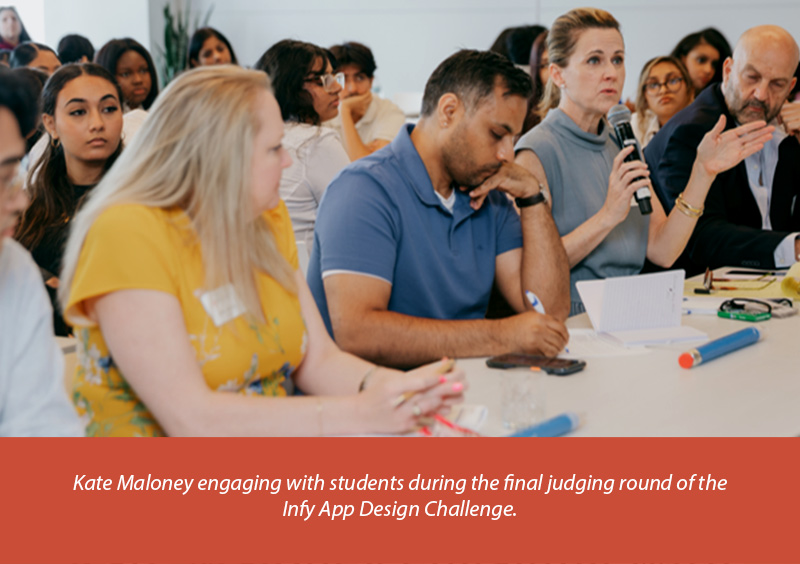
"What really stood out about the QuietSafe team presentation was how confidently the students owned – and conveyed - their ideas. The vision for their app felt purposeful, grounded in real-life experience, was well-intentioned and as a result they delivered!”.
— Kate Maloney, Executive Director, Infosys Foundation USA
What Set the Winning Team Apart

Vishal Durvasula, Infosys Mentor
“The QuietSafe team stood out in how they engaged with feedback. They didn’t just accept suggestions—they challenged us to better understand the core of the feedback and how it would strengthen their solution. That level of curiosity and ownership made a real difference in how their idea evolved.”

Divya S Thankachy, Infosys Mentor
“When the team first chose this topic, it seemed like a challenging space to stand out in, given how many safety apps already exist. But the way they approached it, with real-world research and out-of-the-box thinking, made their solution truly compelling.”
Why This Matters
When students experience real stakes, they respond differently. They choose the work, stay with it, and push it further.
What changed most wasn’t just what students built. It was how they showed up. They weren’t doing just schoolwork. They were doing something that mattered.

